
 10 Best Photo Places in the USA
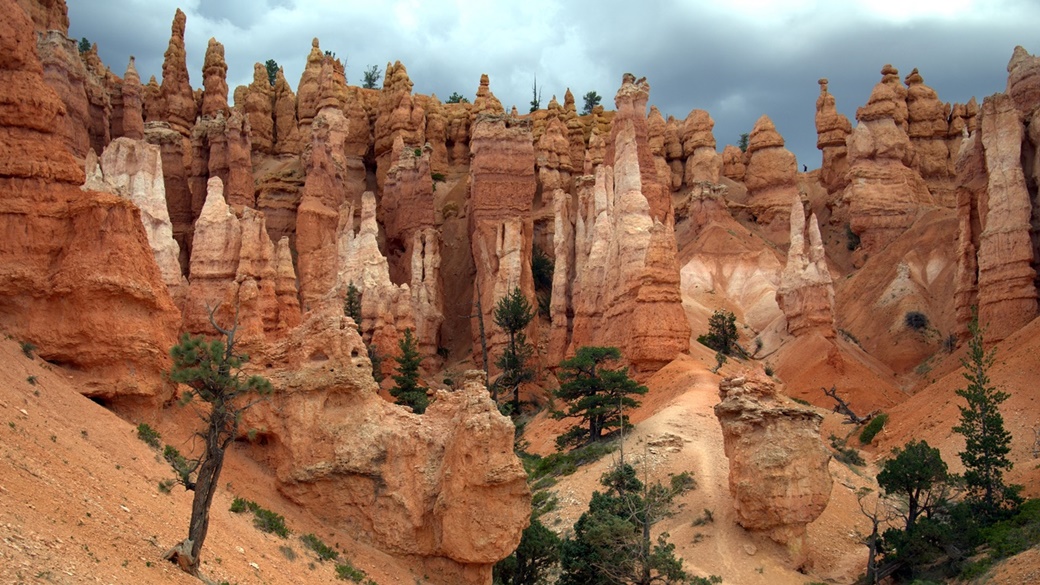
Bryce Canyon National Park is truly unique. The park’s dozens of narrow, orange-brown-white rock formations, known as hoodoos, make it a destination well worth visiting, especially considering it’s only a four-hour drive from southern Utah to Las Vegas.
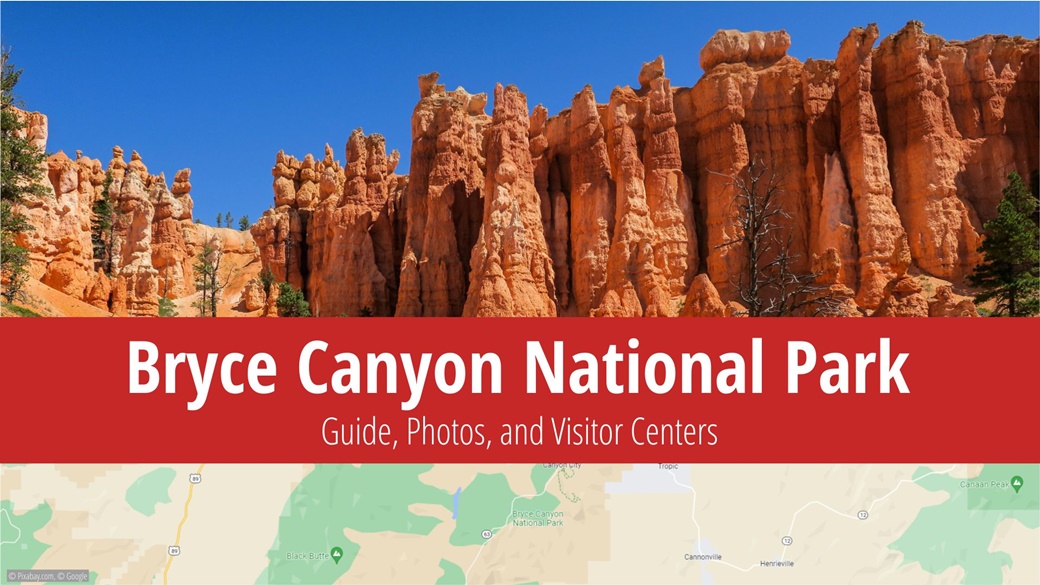
Table of Contents
- About Bryce Canyon National Park
- Sights and Activities in Bryce Canyon National Park
- Best Time to Visit Bryce Canyon National Park
- Bryce Canyon National Park Entrance Fees
- How to Get to Bryce Canyon National Park
- Lodging in Bryce Canyon National Park
- Advice and Recommendations Before Traveling to Bryce Canyon National Park
- Photos of Bryce Canyon National Park
About Bryce Canyon National Park
Bryce Canyon National Park is a small national park located in the southern part of the state of Utah. The park covers only 56 sqmi and sits in the center of a quadrangle formed by the national parks Grand Canyon, Zion, Canyonlands, and Capitol Reef. The national park was established on February 25, 1928, and today, approximately 2,104,600 people visit the park annually, as per 2021 figures. Mormons began settling in the park area in the mid-nineteenth century, and Ebenezer Bryce, who arrived in 1874, was among them. The national park was named after him.
The highest point in Bryce Canyon is Rainbow Point, which is 7,464 ft above sea level. This site is located at the end of a 18 mi scenic drive, promising wonderful views of the surrounding rocks. In contrast, the lowest point is Yellow Creek in the northeastern part of the park, with an elevation of 6,627 ft.
The park boasts over 400 species of plants, with their distribution divided into several zones depending on elevation. You’ll typically find pines, junipers, spruces, and willows, some of which are over 1,600 years old.
Among the wildlife, visitors may see foxes, cougars, black bears, bobcats, deer, or elk. Endangered species such as prairie dogs, California condors, and willow flycatchers also make their home in the park. The latter are birds.
Sights and Activities in Bryce Canyon National Park
I recommend starting your park tour at the visitor center. If you have a car, you can then embark on a 19 mi scenic drive, which Americans refer to as roads with stunning views. There are 13 stops with scenic viewpoints along this route. Some of the most interesting ones include:
Sunrise Point
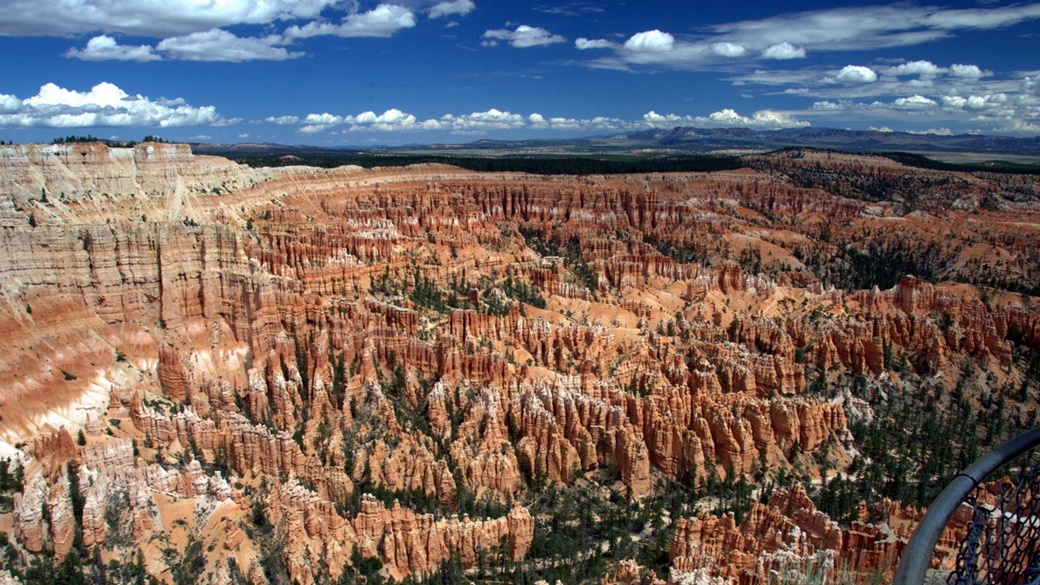
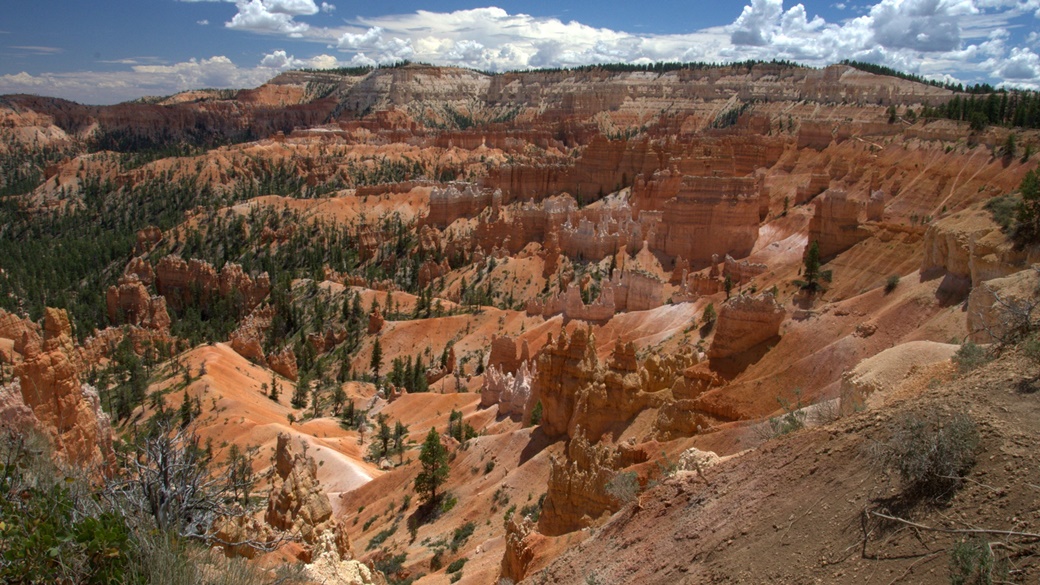
This spot, a short distance from the visitor center, offers a great view of the entire amphitheater (a term for a set of hoodoos rock formations). As the name suggests, Sunrise Point is best visited early in the morning.
Sunset Point
Just a short walk from Sunrise Point (follow the Rim Trail), Sunset Point, as you might guess, is best enjoyed at sunset. From here, you’ll also have a great view of the amphitheater.
Inspiration Point
Accessible by car or by the Rim Trail, Inspiration Point is where you’ll capture the best photos in the evening.
Bryce Point
Accessible by car or the Rim Trail, Bryce Point offers even more impressive panoramic views of the hoodoos.
Natural Bridge
The Natural Bridge, about halfway along the Scenic Drive, is more of a tunnel in the rock than a grand bridge, but it is beautiful nonetheless!
Rainbow Point
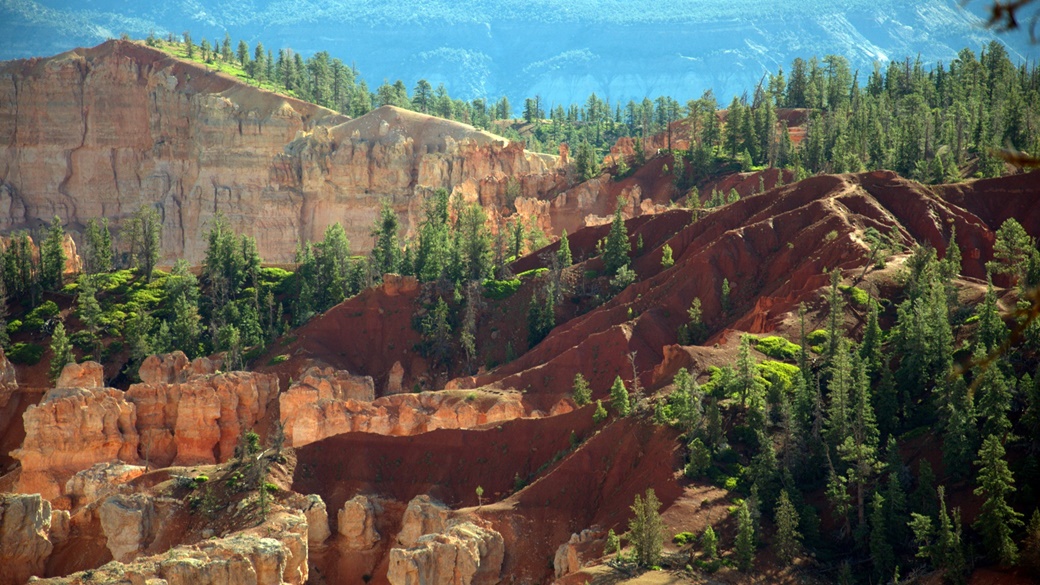
Situated at the very end of the scenic drive along with the Yovimpa Point overlook, Rainbow Point provides a view of orange hoodoos contrasting with verdant greenery. Several hiking trails also begin here.
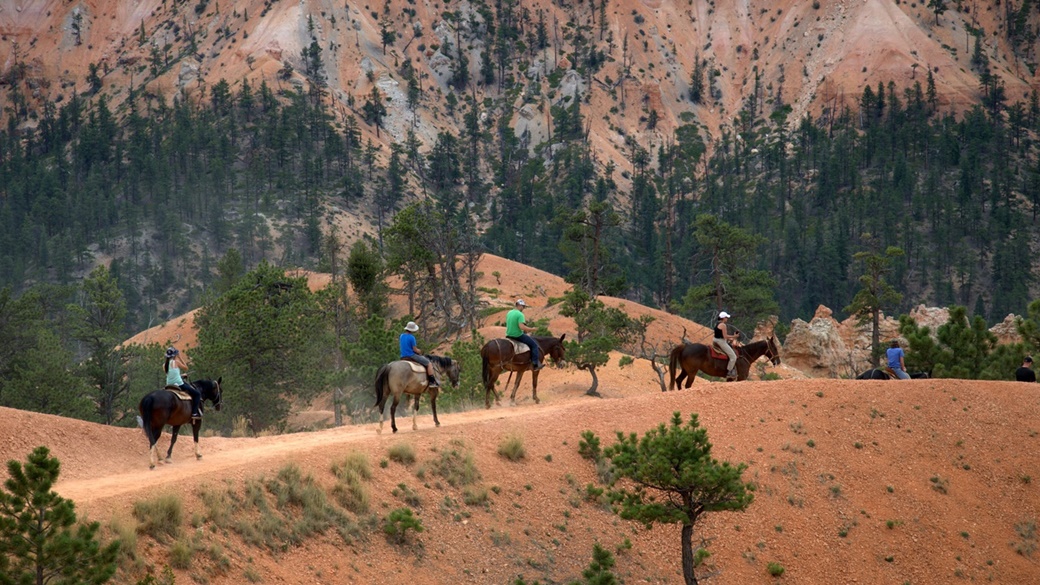
If you enjoy hiking, you won’t be bored in Bryce Canyon National Park. The most famous trail is the 11 mi Rim Trail, a portion of which most park visitors will hike. It runs from Fairyland Point to Bryce Point, is partially paved, and includes several overlooks.
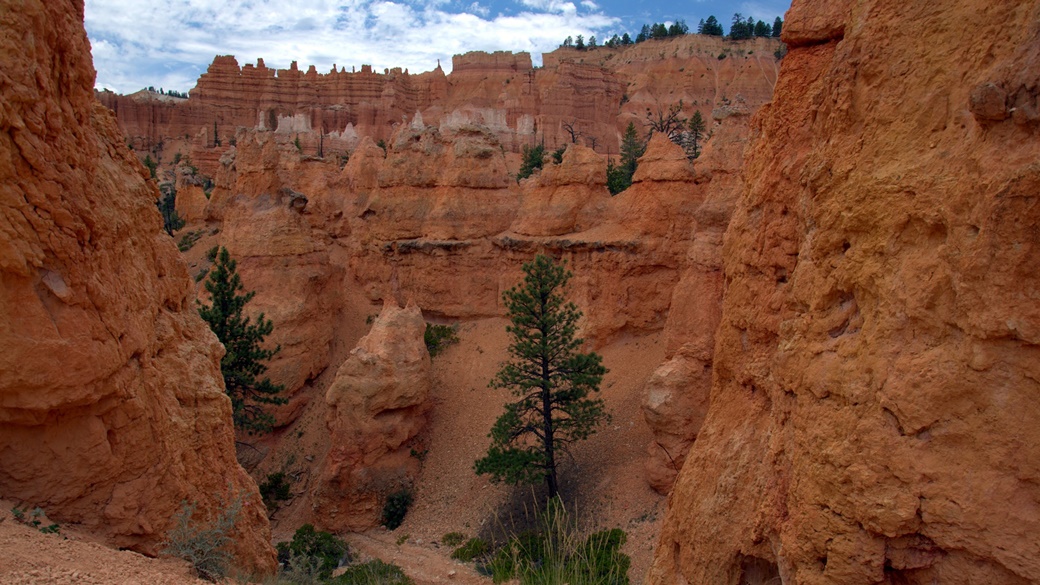
Mossy Cave is a 1 mi trail accessible from Highway 12. It leads to waterfalls and a cave, and along the way, you’ll enjoy views of hoodoos. The 1 mi Navajo Loop is also one of the most popular trails. It starts at Sunset Point, and during the hike, you will see the famous Thor’s Hammer and Wall Street formations.
- For an overview of the trails, along with maps, visit the park’s website.
If you’re a romantic with time to spare, spend the night in the park to watch the stars and then the sunrise. With minimal light pollution, the night sky in Bryce Canyon is very visible. Just be sure to dress warmly.
In the summer, interested visitors can participate in programs organized by the park rangers. These are usually talks and lectures.
Best Time to Visit Bryce Canyon National Park
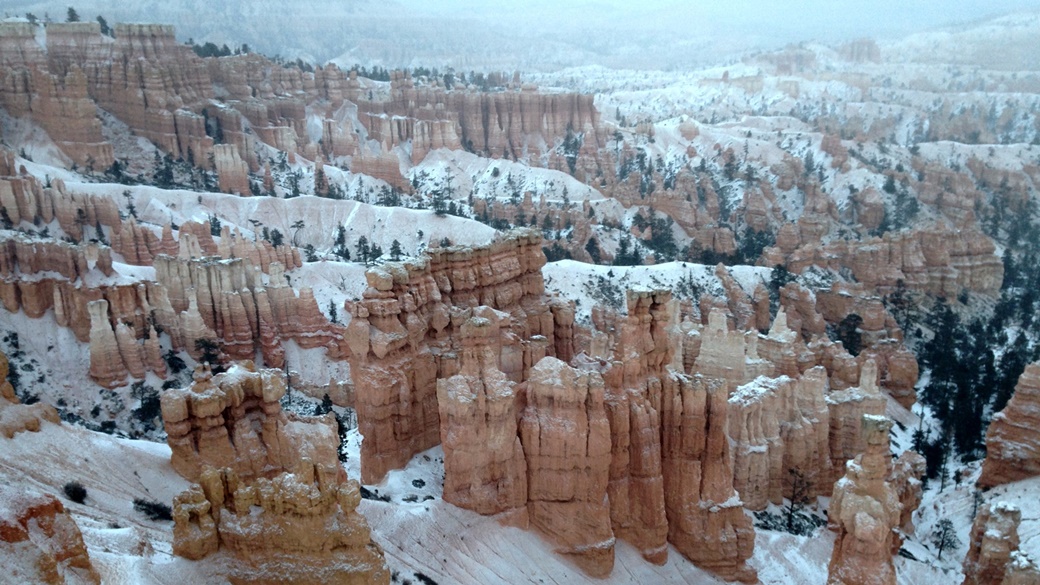
Bryce Canyon National Park is open year-round, however, some roads may close after winter snowstorms. The visitor center is also open year-round, from 8:00 a.m. to noon each day.
Most visitors come to the park in the summer, when temperatures range between 50 °F–75 °F and there are occasional rain showers. But the weather is generally pleasant from about May onwards. Compared to the Grand Canyon and other national parks in Utah, the heat here is less intense.
From October to early May, it can get very cold, with freezing temperatures virtually every night. Temperatures in December and January generally range from 28 °F to 36 °F.
Average Temperatures and Visitor Numbers at Bryce Canyon National Park
Average temperatures in Bryce Canyon National Park are shown below. Visitor counts are based on averages from 2017 to 2021. The data source is the National Park Service.
| Max Temp | Min Temp | Precipitation Days | Visitors | Popularity | |
|---|---|---|---|---|---|
| January | 36 °F | 10 °F | 3.0 | 31 815 | 🟩 |
| February | 39 °F | 14 °F | 3.5 | 33 981 | 🟩 |
| March | 46 °F | 19 °F | 3.8 | 88 409 | 🟩 |
| April | 55 °F | 25 °F | 3.2 | 177 011 | 🟨🟨 |
| May | 64 °F | 32 °F | 2.7 | 317 260 | 🟧🟧🟧 |
| June | 75 °F | 39 °F | 1.9 | 386 816 | 🟥🟥🟥🟥 |
| July | 79 °F | 46 °F | 5.0 | 383 502 | 🟥🟥🟥🟥 |
| August | 77 °F | 45 °F | 6.3 | 347 677 | 🟧🟧🟧 |
| September | 70 °F | 37 °F | 4.3 | 367 671 | 🟧🟧🟧 |
| October | 59 °F | 28 °F | 3.7 | 213 379 | 🟨🟨 |
| November | 45 °F | 19 °F | 2.9 | 71 755 | 🟩 |
| December | 36 °F | 10 °F | 3.1 | 43 877 | 🟩 |
Bryce Canyon National Park Entrance Fees
The entrance fee to Bryce Canyon National Park is $35. This entrance fee is valid for 7 days and covers both the car and all its passengers. Entry for motorbikes is $30 and for pedestrians, it’s $20.00 per person.
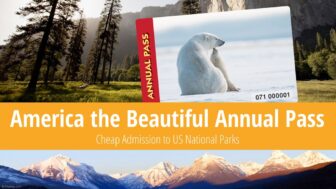
If you plan to visit more national parks in the USA, consider purchasing the America the Beautiful Pass. This is similar to a season pass—it grants access to all of America’s parks, monuments, forests, etc. for a year. You can buy one for $80.
How to Get to Bryce Canyon National Park
To get to Bryce Canyon, I recommend renting a car. This will provide you with the freedom to move around and explore the surrounding parks at your own pace.
| From / To | Distance | Driving Time | Map |
|---|---|---|---|
| Albuquerque | 542 mi | 9 hours | View Route |
| Denver | 567 mi | 8 hours 45 minutes | View Route |
| Las Vegas | 261 mi | 4 hours | View Route |
| Salt Lake City | 269 mi | 4 hours | View Route |
There are no buses or other public transportation options to the park.
Lodging in Bryce Canyon National Park
🏨 Hotels
Several hotels and motels, available at various price ranges, are conveniently located near Bryce Canyon. They can all be easily accessed from the main road.
⛺ Campsites
You can also choose to stay overnight within the park in campsites equipped with toilets, drinking water, and showers, available for a fee.
- North Campground
This year-round campground, located near the visitor center, offers 107 sites for tents or RVs. The fee per site per night is $20.00 and reservations can be made from May through September at Recreation.gov. - Sunset Campground
Situated near the Sunset Point site, this campground is open from April through October. It accommodates 101 sites, some of which are designed for RVs. The cost per site per night is $20.00. Please note, reservations are not accepted for this campground.
Advice and Recommendations Before Traveling to Bryce Canyon National Park
ℹ️ Visitor Center
Starting your tour of Bryce Canyon National Park with a visit to the visitor center is highly recommended. It is located 4 mi south of the intersection of Highways 12 and 63. There, you can watch an informative video about the park, which is screened every half and full hour each day, explore geological and historical exhibits in the museum, or engage with park rangers. A single day is sufficient for a self-guided visit.
👍 Good to Know
For navigating around the park, you can utilize the complimentary Bryce Canyon Shuttle. The buses operate from early May to early October, running daily from 8 a.m. to 8 p.m. throughout the park. The frequency of bus departures is between 10 and 20 minutes.
Ensure to wear sturdy shoes, apply ample sunscreen, and pack plenty of water along with a good snack in your backpack.
When planning your trip, remember to download Bryce Canyon NP brochures and maps to your phone. The park service offers these resources for free.
Photos of Bryce Canyon National Park
US National Parks
- National Parks of the USA – Map, List and Annual Pass
- America the Beautiful Pass 2025 – How It Works, Cost & Parks
- Timed-Entry Reservation for US National Parks (2025 GUIDE)
Travel Guides to USA National Parks



Contribute with Your Question or Personal Experience