
 10 Best Photo Places in the USA
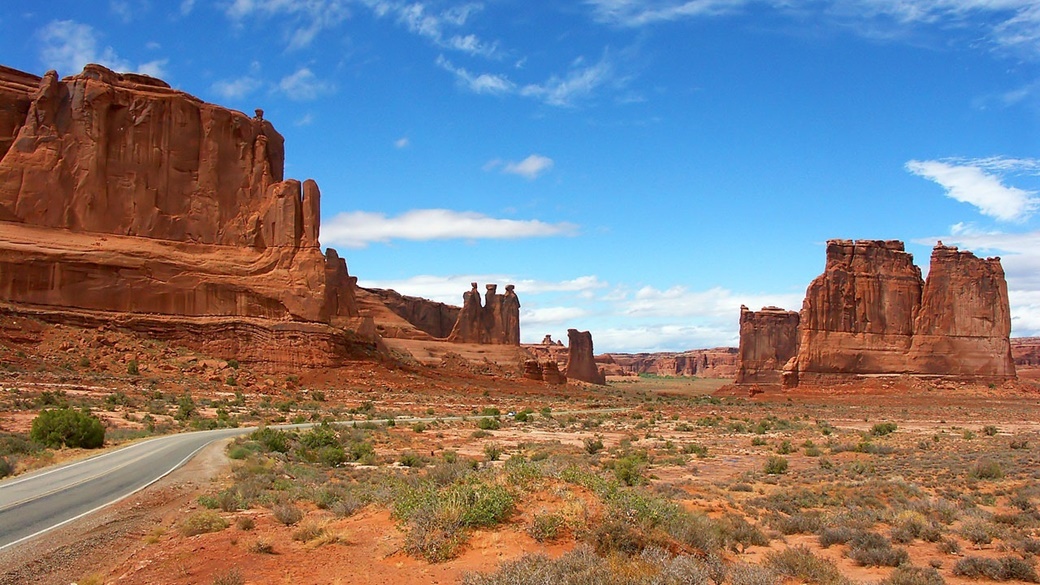
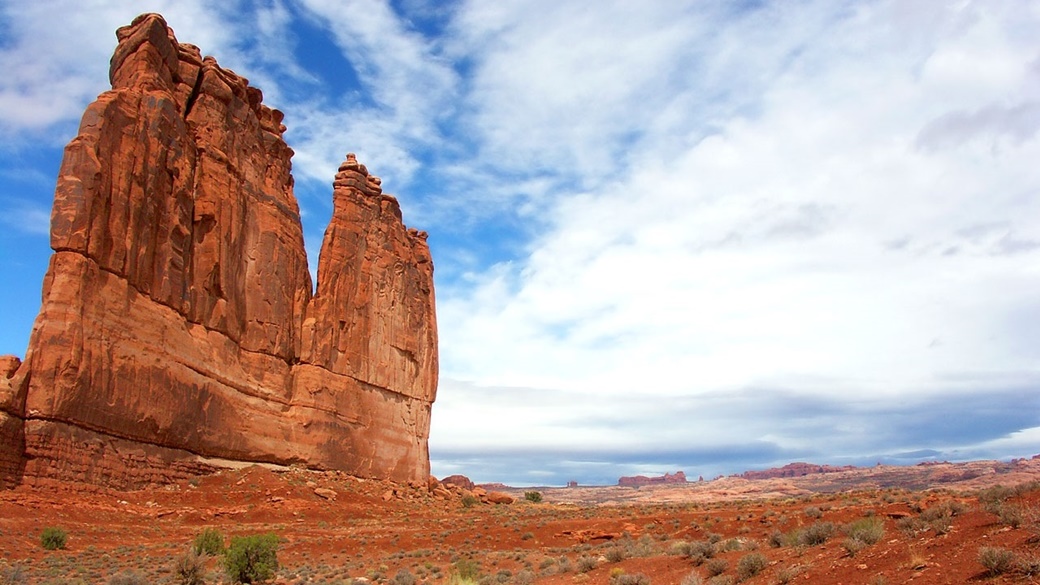
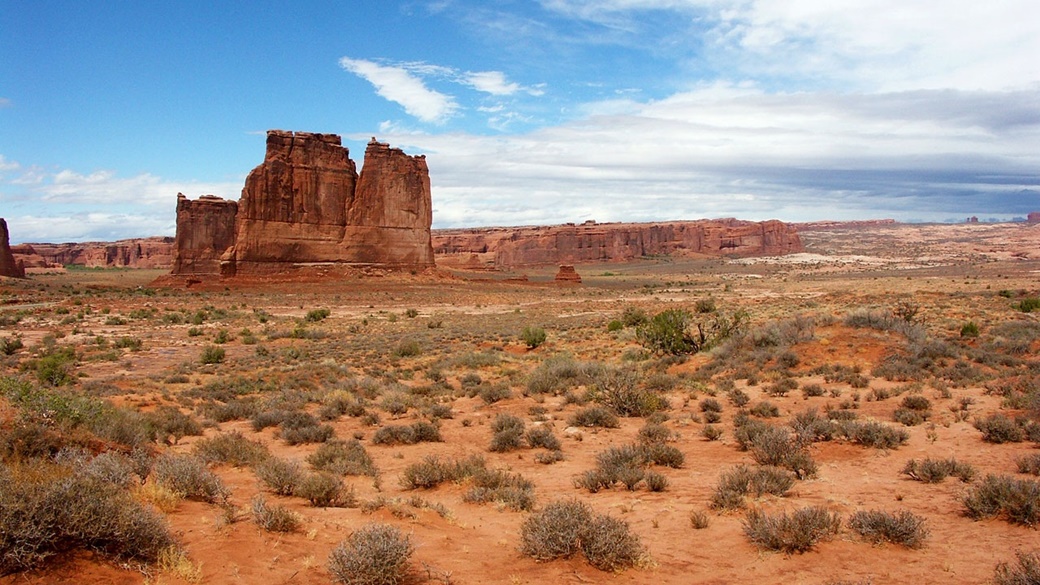
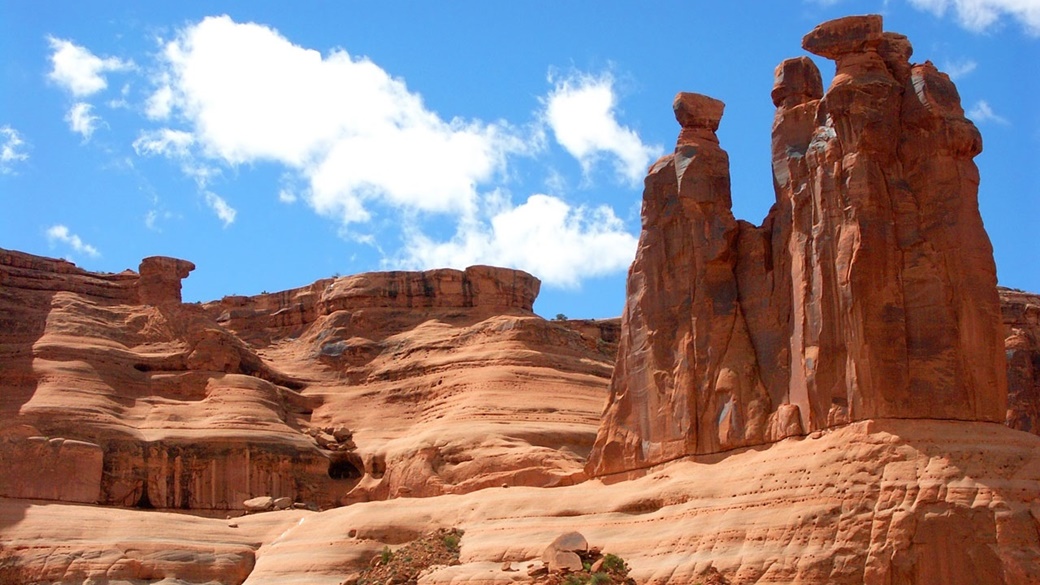
Arches National Park, situated near the Colorado River, boasts the highest concentration of rock arches and bridges worldwide. The intriguing contrast of these formations with the desert backdrop and clear blue skies creates a sight that will leave you astounded.
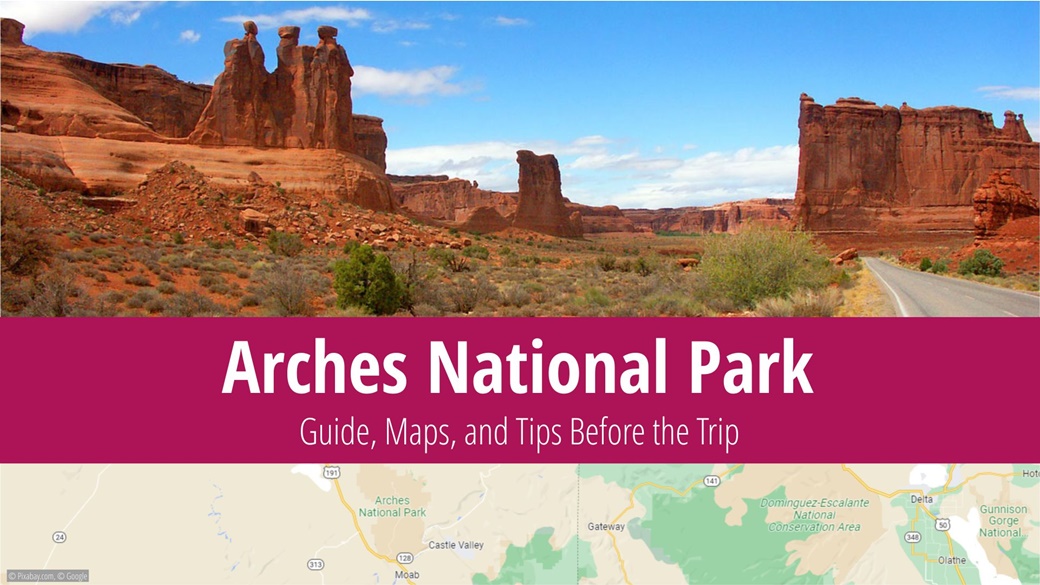
Table of Contents
Information About Arches National Park
Arches National Monument earned its designation on April 12, 1929, but it wasn’t until 1971 that it became a national park. Its uniqueness lies in its sandstone arches, numbering over 2,000. Over the past 50 years, more than 40 of these structures have succumbed to the forces of erosion.
The formation of arches in Arches National Park began approximately 300 million years ago when the entire area was underwater. The gradual evaporation and flooding cycles resulted in the formation of salt and subsequently sandstone cliffs. The highest point is found at Elephant Butte, standing at 5,653 ft.
What to Do in Arches National Park
Visitors flock to Arches National Park to experience its magnificent sandstone arches.
Delicate Arch
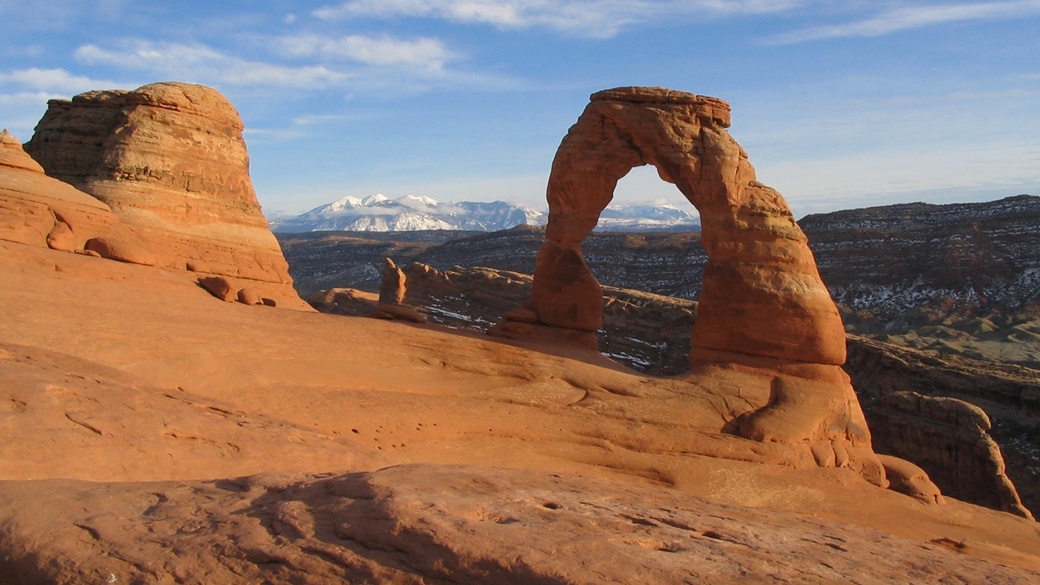
The park’s most iconic feature is the Delicate Arch, a 66 ft-high sandstone arch. This landmark is one of Utah’s state symbols, featured on everything from car license plates to postage stamps. It can be viewed from afar, or you can opt for a hike. An early morning visit is recommended to avoid the crowds.
The Windows
Located less than 9 mi from the park entrance near the main road is a cluster of several arches. The first formation you’ll encounter is Balanced Rock, a 128 ft-high formation that resembles a rock precariously balancing atop another. Until the winter of 1975/1976, Balanced Rock had a smaller companion, “Chip Off The Old Block”, which unfortunately collapsed due to erosion.
Other rocks in the vicinity include Turret Arch, North Window, and South Window.
Devil’s Garden
Situated at the end of the main road, Devil’s Garden offers an 7 mi hike for the brave at heart. The Devil’s Garden rewards explorers with unforgettable vistas. The area’s main attraction is the Landscape Arch bridge, measuring 289 ft long, rumored to be the world’s longest. The immediate area surrounding Landscape Arch has been closed since 1991 due to a portion of the formation collapsing.
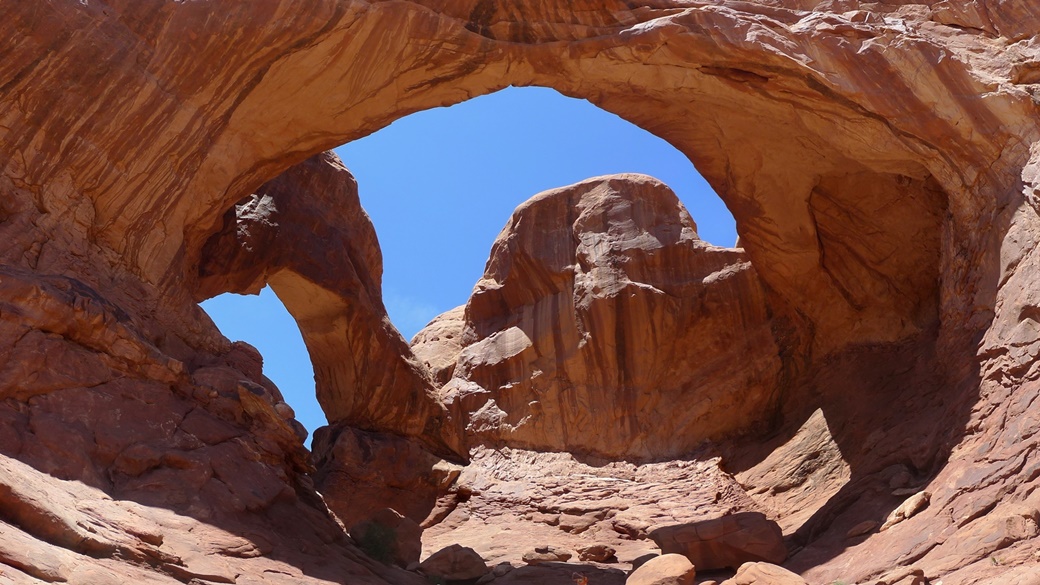
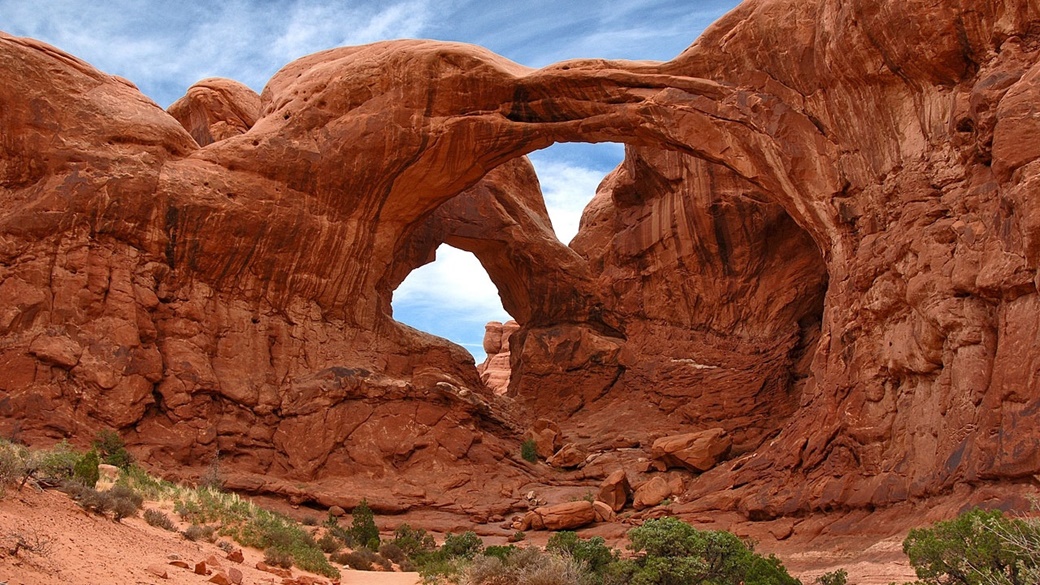
Additional notable formations in the area include Double O Arch, Dark Angel, Tunnel Arch, Pine Tree Arch, and Partition Arch.
When to Visit Arches National Park
Arches National Park is open throughout the year. The optimal months to visit Arches National Park are May and September. However, summer is traditionally the most popular time, with temperatures in the vicinity of the town of Moab soaring into the 104 °F.
In spring, temperatures in Arches hover around 70 °F during the day, dropping to below 39 °F at night. This period boasts fewer people and mosquitoes. Autumn, being the rainiest time of the year in Arches, also provides an excellent opportunity for observing bighorn sheep, coyotes, prairie dogs, and mule deer. Winters in Arches are extraordinary. A layer of snow or ice can grace the arches, with temperatures fluctuating between 39 °F and 50 °F.
Average Temperatures and Visitor Numbers in Arches National Park
Average temperatures in Arches National Park. Visitor numbers are based on a 2017-2021 average, data sourced from the National Park Authority.
| Max Temp | Min Temp | Precipitation Days | Visitors | Popularity | |
|---|---|---|---|---|---|
| January | 45 °F | 21 °F | 2.8 | 28 779 | 🟩 |
| February | 52 °F | 28 °F | 2.9 | 39 200 | 🟩 |
| March | 64 °F | 36 °F | 3.5 | 133 170 | 🟨🟨 |
| April | 72 °F | 43 °F | 3.4 | 167 251 | 🟧🟧🟧 |
| May | 82 °F | 52 °F | 3.2 | 209 792 | 🟧🟧🟧 |
| June | 93 °F | 61 °F | 1.9 | 216 583 | 🟧🟧🟧 |
| July | 100 °F | 66 °F | 4.6 | 205 908 | 🟧🟧🟧 |
| August | 97 °F | 66 °F | 5.1 | 180 504 | 🟧🟧🟧 |
| September | 88 °F | 55 °F | 5.1 | 199 124 | 🟧🟧🟧 |
| October | 73 °F | 43 °F | 4.0 | 150 464 | 🟨🟨 |
| November | 55 °F | 30 °F | 3.0 | 77 642 | 🟩 |
| December | 45 °F | 23 °F | 2.8 | 42 558 | 🟩 |
Admission to Arches National Park
The entrance fee to the national park is $30 per car, including all occupants. For those entering the park on foot or by bicycle, the fee is $15.00 per person. Both options are valid for 7 days.
During the peak season, reservations are required for entry to Arches Park. Be sure to secure your spot in advance.
If you plan to visit multiple destinations during your USA travel, consider purchasing an America the Beautiful pass at $80. This pass allows you access to all national parks in the USA for a single fee.
How to Get to Arches National Park
The visitor center and entrance to Arches National Park are located adjacent to U.S. Highway 191 near the town of Moab (view map). The easiest and quickest way to reach the park is by car (ideally a 4×4). The approximate distances and times to Arches are as follows:
| From / To | Distance | Driving Time | Map |
|---|---|---|---|
| Albuquerque | 368 mi | 6 hours 15 minutes | View Route |
| Denver | 350 mi | 5 hours 30 minutes | View Route |
| Las Vegas | 454 mi | 6 hours 30 minutes | View Route |
| Salt Lake City | 230 mi | 3 hours 40 minutes | View Route |
Lodging in Arches National Park
🏨 Hotels
There is an abundance of accommodation options in Moab to choose from. Motels are also available in the towns of Spanish Valley, Dewey, and Green River.
⛺ Campsites
You can stay overnight at any of the dozens of campgrounds across the park, priced at $25 per night with a maximum of 10 people.
Advice and Recommendations Before Going to Arches National Park
ℹ️ Visitor Center
The visitor center is situated 5 mi north of the town of Moab, just outside the park gate. It is open daily, all year round, including winter. From March 1 to October 31, its hours of operation are 8:00 am to 5:00 pm, and from November 1 to February 28, it is open from 9:00 am to 4:00 pm. The only day it is closed is December 25.
At the center, you can purchase souvenirs, learn more about the park’s history, and challenge the rangers’ knowledge with intriguing questions.
👍 Good to Know
Before heading to the park, it’s recommended to stock up on food and drinks. Food is not available in the park, and water can only be found in certain places.
- You can download brochures and maps of Arches Park on your phone from the park administration
- For more information, visit the official Arches Park website
Photos of Arches National Park
US National Parks
- National Parks of the USA – Map, List and Annual Pass
- America the Beautiful Pass 2025 – How It Works, Cost & Parks
- Timed-Entry Reservation for US National Parks (2025 GUIDE)
Travel Guides to USA National Parks




Contribute with Your Question or Personal Experience