
 10 Best Photo Places in the USA
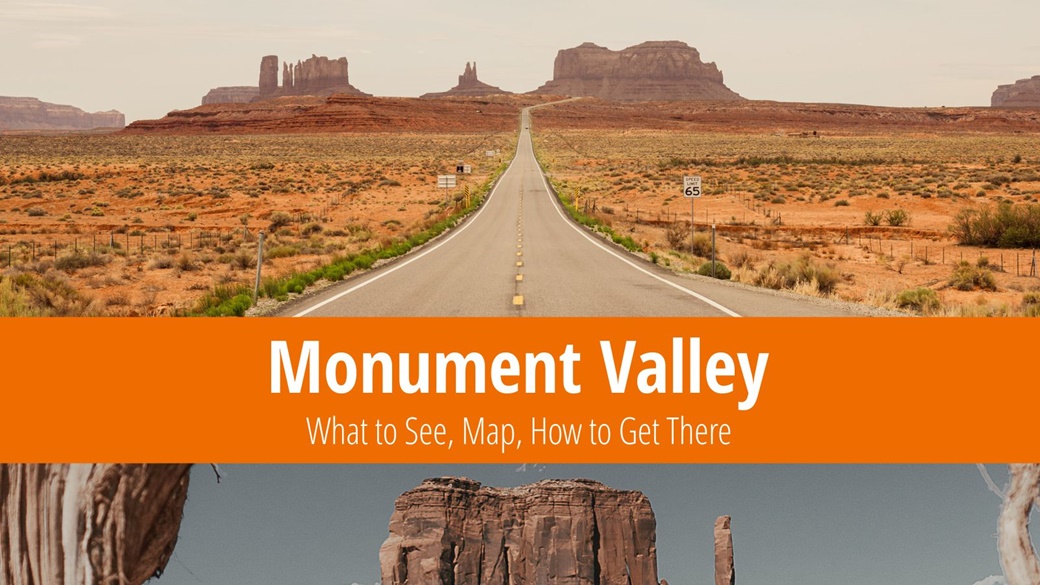
Massive sandstone cliffs, deeply orange-brown desert, and highways stretching for miles in between. Few places in the world offer a landscape as photogenic as Monument Valley, located on the border of the states of Arizona and Utah. Monument Valley is not part of the U.S. National Parks; it is a reservation managed by the Navajo Nation. Undeniably, it is an iconic symbol of the American West and a favorite tourist destination.
-
Table of Contents
Basic Information About Monument Valley
Monument Valley consists of red sandstone formations towering from 400 ft to 1,000 ft. These rock formations were created by the erosion of sediments deposited during the Permian and Triassic periods. Today, Monument Valley is under the management of the Navajo Nation, who call the area Tse’Bii’Ndzisgaii in their language.
Monument Valley experiences significant seasonal temperature changes. Despite its desert character, winters can be freezing.
During summer, from late May to early September, daily temperatures generally range from 70 °F to 95 °F, but drop quickly after sunset. In winter, snow occasionally blankets the valley, with temperatures typically between 27 °F and 50 °F between December and February.
The valley suffers from a lack of water, resulting in sparse vegetation, mainly consisting of grasses, shrubs, and cacti.
This iconic valley has served as the filming location for numerous famous movies, including Back to the Future Part III, Forrest Gump (featuring the famous running scene on U.S. Route 163), Transformers, and Fort Apache.
-
Visitor Tips for Monument Valley
🕒 Monument Valley Scenic Drive Hours
The Monument Valley roads are open daily from February 1 to September 30, from 7:00 AM to 7:00 PM, with the last entry allowed at 4:30 PM.
In the winter season, from October 1 to January 31, the park is open from 8:00 AM to 5:00 PM, with the last entry at 2:30 PM. The park is closed on Thanksgiving (the fourth Thursday of November), Christmas (December 25), and New Year’s Day (January 1).
Only about 25 vehicles are allowed on the scenic road at a time, so expect a wait of approximately 30–45 minutes.
🎟️ Monument Valley Scenic Drive Admission
The admission fee for the Monument Valley Scenic Drive is $8.00 per person (January 2025). Payments can be made in cash or by card. America the Beautiful or other passes are not accepted.
If you prefer not to drive the Scenic Drive yourself, you can book a tour with a Navajo guide. The tour lasts about three hours and includes access to restricted areas of Monument Valley.
🚗 Getting to Monument Valley
To visit Monument Valley, you will need a rental car, as public transportation is virtually nonexistent. For navigation, use the address of the Visitor Center.
You can combine your visit with a trip to the Grand Staircase–Escalante National Monument or national parks like Zion, Mesa Verde, Canyonlands, or the Grand Canyon. Monument Valley is most easily accessible via U.S. Highway 163. Click below for directions from nearby cities:
- Albuquerque / 322 mi / 5 hours 20 minutes / route
- Denver / 504 mi / 8 hours / route
- Las Vegas / 397 mi / 6 hours 30 minutes / route
- Salt Lake City / 383 mi / 6 hours 30 minutes / route
🏨 Lodging Near Monument Valley
Accommodation directly within Monument Valley is limited and generally more expensive than in nearby towns. Consider staying in towns like Blanding or Page. Both offer affordable motels and hotels with good value for money. It’s a good idea to plan your lodging according to your travel itinerary.
ℹ️ Good to Know
The Monument Valley Visitor Center is open daily from 8:00 AM to 5:00 PM. Here, you can pick up maps and permits if you plan to hike in the area. The center also offers restrooms and a souvenir shop.
For more information, visit the official Monument Valley website.
-
What to See in Monument Valley
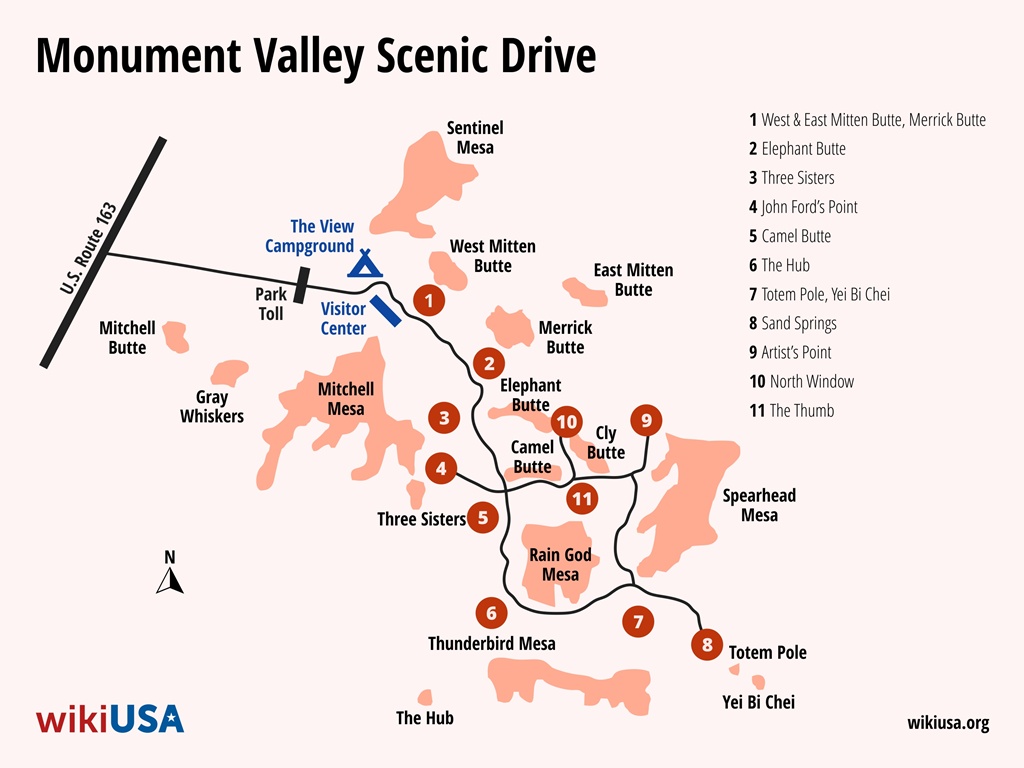
The main attraction in Monument Valley is the Scenic Drive. This 17 mi-long route can be driven, offering views of some of the most stunning rock formations in America. The road is unpaved and may become impassable during rain. It is recommended to rent an SUV or crossover for this trip.
A speed limit of 15 mph is enforced on the entire road. The drive takes approximately three hours, during which you can see more than a dozen remarkable rock formations.
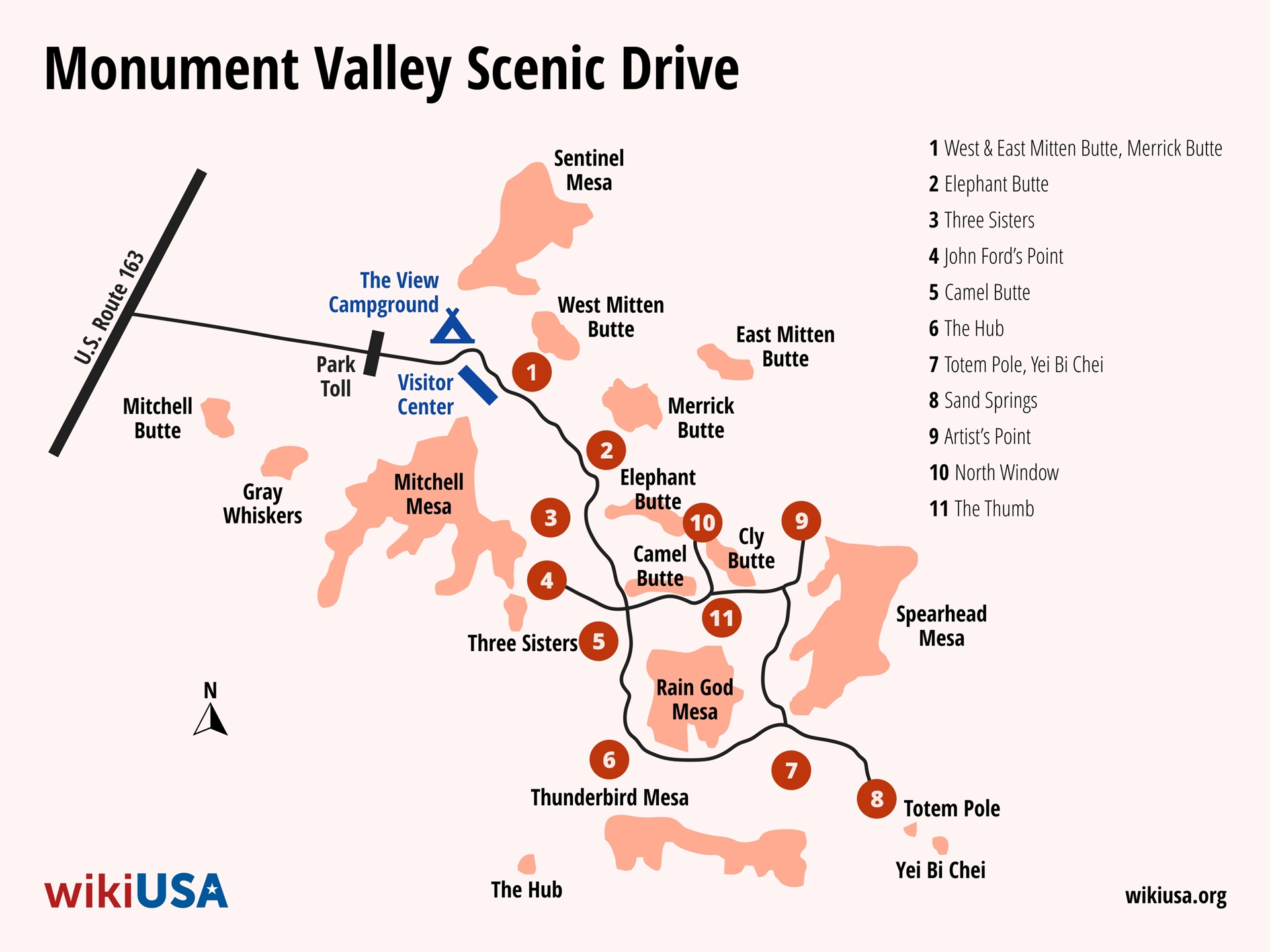
🗺️ Map of Rock Formations in Monument Valley
To help navigate the Monument Valley Scenic Loop Drive, there are specific stops marked on Google Maps. It is also recommended to save this high-resolution map image to your phone for easy reference.
-
Rock Formations in Monument Valley
West Mitten Butte & East Mitten Butte
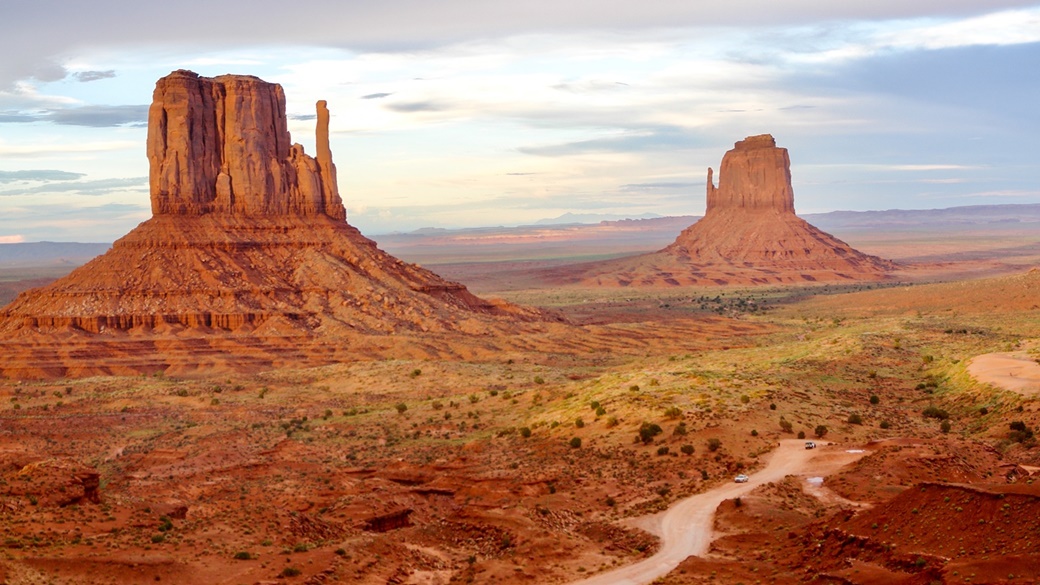
West Mitten Butte and East Mitten Butte are two iconic formations in Monument Valley that resemble a pair of gloved hands, which inspired their names. The glove-like shape is particularly noticeable during sunrise and sunset when shadows accentuate their forms. To some, the Mitten Buttes may look like watchtowers guarding the valley.
In late March and mid-September, a rare phenomenon occurs when the shadow of West Mitten Butte dramatically falls on East Mitten Butte. Both formations have been featured in several Western films, further popularizing Monument Valley.
Merrick Butte & Mitchell Mesa
According to unverified legend, these formations were named after two prospectors, Ernest Mitchell and Thomas Merrick, who discovered silver deposits in the area in the late 19th century. In 1880, they were reportedly killed by Ute tribe members, who stole the mined silver.
Merrick Butte rises 965 ft and is characterized by sharp edges, while Mitchell Mesa, a wide plateau, reaches a height of 676 ft. Both formations were shaped over millions of years from sediments that were once part of an ancient seabed.
Elephant Butte
Elephant Butte stands 682 ft high and resembles an elephant standing in the desert. The silhouette of the elephant, including its trunk, is most recognizable under specific lighting conditions throughout the day.
For the best photo of Elephant Butte, it is recommended to view it from the south side. This unique shape was formed over centuries due to strong winds.
Three Sisters
Three Sisters is a trio of slender spires that are remnants of an eroded ridge once connected to Mitchell Mesa. From certain angles, the formations resemble cloaked figures gazing over the valley. During sunrise and sunset, the colors of the rocks change, enhancing the mystique of these formations, which are named after three nuns.
According to Navajo legend, Three Sisters symbolizes faith, hope, and love.
Camel Butte
This formation, with a summit at an elevation of 5,846 ft, resembles a camel with distinct humps, hence its name Camel Butte. The camel-like shape becomes more or less apparent depending on how the sunlight shifts throughout the day.
Camel Butte is primarily composed of sandstone, which was deposited over 180 million years.
The Hub
This rock formation, approximately 164 ft high, resembles a hut or a small fortress, which inspired the Navajo to name it The Hub. Its isolated location, with no other formations nearby, adds to the sense of solitude.
The surrounding desert is rich in minerals, creating the vibrant orange and red hues of the sand that Monument Valley is known for.
Rain God Mesa
Some guides refer to Rain God Mesa as the heart of Monument Valley. This massive rock formation rises 620 ft high, with a summit elevation of 5,922 ft. Its name comes from Navajo shamans who prayed to the Rain God here, believing the formation replenished rain supplies for the valley.
The southern side of Rain God Mesa features darker streaks created by water flowing at the base of the rock. The unique microclimate sometimes causes clouds to gather above the mesa, reinforcing the legend of its influence on rainfall.
Bird Springs
Bird Springs is a scenic overlook offering a panoramic view of the sand dunes known as Sand Springs. These dunes are primarily composed of quartz, which gives them a radiant color. The ever-shifting winds continuously reshape the dunes, offering visitors a slightly different experience every day.
The best time for photography at Bird Springs is early morning when the light is most favorable.
Totem Pole
Totem Pole is a 427 ft tall, extremely slender rock spire formed by erosion over millions of years. Its totem-like appearance makes it a favorite subject for photographers.
Climbing Totem Pole is strictly prohibited to honor its sacred significance to the Navajo people. This restriction applies to all rock formations in Monument Valley. An exception was made for director Clint Eastwood during the filming of The Eiger Sanction in 1975. In return, the filmmakers were required to remove all climbing equipment left behind by previous climbers.
The Yei Bi Chei
Located east of Totem Pole, the Yei Bi Chei rock formations hold profound spiritual significance for the Navajo people. The formations resemble figures of Navajo deities performing a ceremonial dance. Their flowing shapes can also evoke the image of dancers in motion to other visitors.
The name Yei Bi Chei translates to “Holy People,” emphasizing its spiritual importance to the Navajo.
Artist’s Point
Artist’s Point is a popular overlook offering a stunning panorama of Monument Valley. The viewpoint gained its name due to its popularity among artists who come here to paint the breathtaking landscape. For those seeking great photos of Monument Valley, a stop here is a must.
The lighting conditions at Artist’s Point vary by season, providing a unique experience with every visit.
Spearhead Mesa
Spearhead Mesa is a rock formation standing 738 ft tall, with a summit elevation of 5,997 ft. Its steep, pointed walls resemble the tip of a massive spear rising from the desert floor, which inspired its name.
The layers of Spearhead Mesa were formed by ancient rivers and shifting sand dunes, making the differences between its rock layers visible from its base.
North Window
The North Window stop provides a natural frame for viewing the northern section of Monument Valley. To the left, you’ll see the Elephant Butte rock formation, and to the right, the 518 ft tall Cly Butte, whose summit reaches 5,820 ft. Cly Butte is named after a Navajo medicine man, Cly, who is said to be buried at its base.
North Window is a favorite spot for photographers, offering expansive and open views of Monument Valley.
The Thumb
The Thumb is a solitary rock formation resembling an upright thumb or, as some see it, a cowboy boot. Its isolated position makes it easy to recognize on the horizon.
Geologists speculate that The Thumb will continue to erode, potentially causing its base to narrow even further over time.
-
Photos of Monument Valley

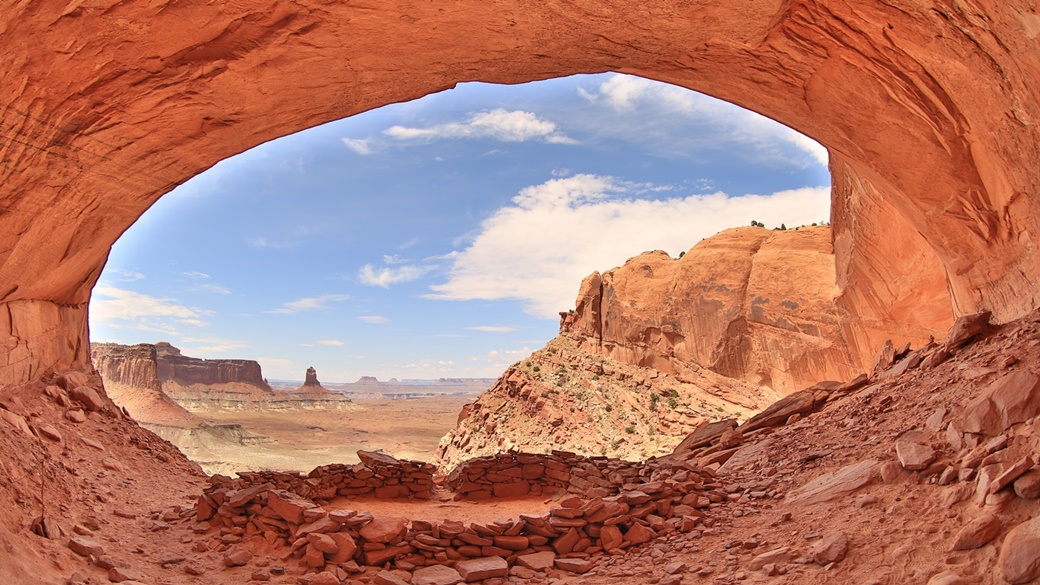
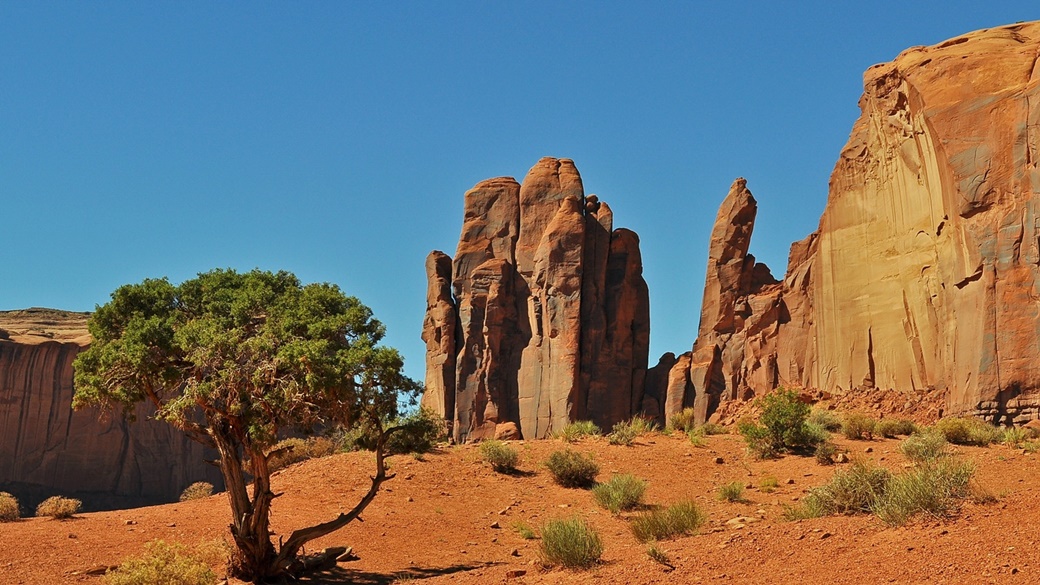
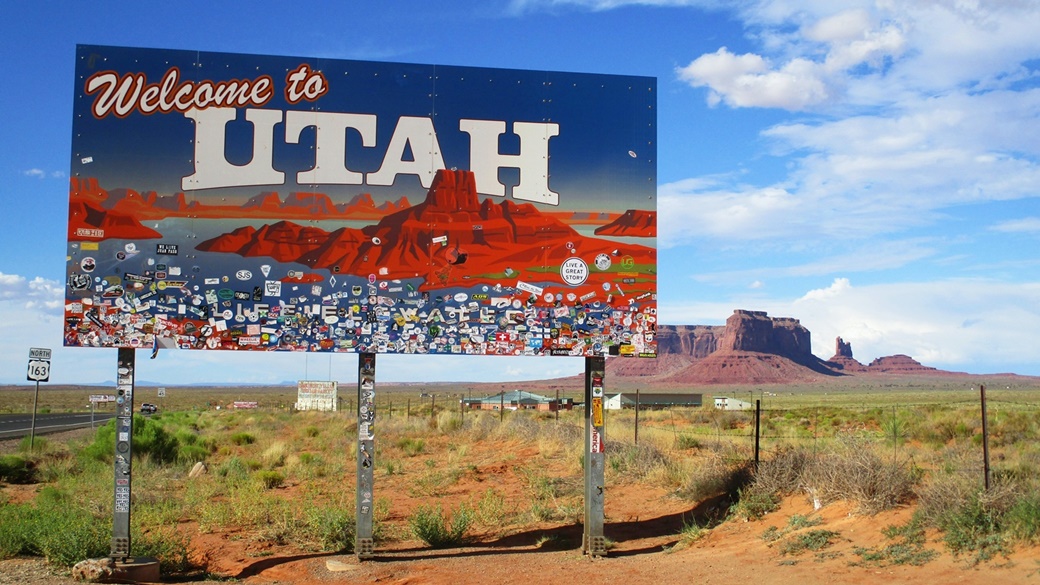




Contribute with Your Question or Personal Experience