
 10 Best Photo Places in the USA
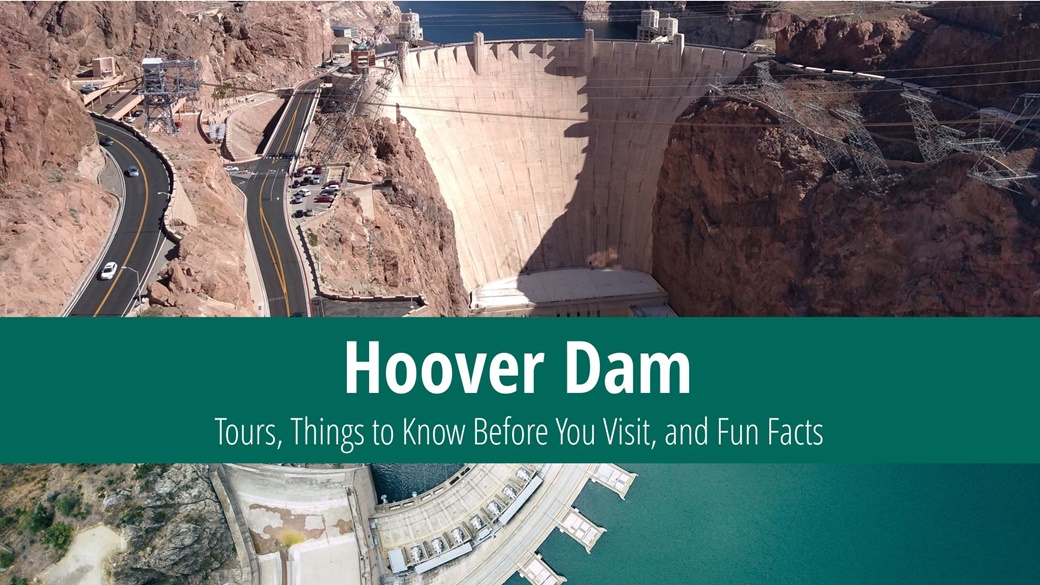
The Hoover Dam is located on the Colorado River near Las Vegas. When it was completed in 1935, it was the tallest dam in the world. While Hoover Dam is no longer among the largest dams today, it has become a popular tourist attraction. Read on to learn how you can visit the inner workings of the dam, how much its construction cost, and the eerie connection between the first and last workers to die during its construction.
-
Table of Contents
History of Hoover Dam
The idea of building a massive dam began to take shape at the end of the 19th century, but initially, these were just vague proposals without specific plans. The first major step forward came in 1922, when a relevant commission was formed, and the project began to gain momentum. The goal was to prevent dangerous flooding from the Colorado River while simultaneously harnessing the dam’s potential for power generation. The project was overseen by Herbert Hoover, who was then Secretary of Commerce and future President of the United States.
The preparation of the project, officially named Boulder Canyon, took another seven years. Part of the plans included the construction of a new town, Boulder City, where workers involved in building the dam would be housed. In the early years of construction, workers lived in makeshift tent camps, where living conditions, even by the standards of the time, were very poor, leading to frequent protests.
In August 1931, some dissatisfied workers began to strike, demanding better working conditions. The construction of the dam was ahead of schedule, and the high demand for work during the severe economic depression helped quickly ease the crisis. The average wage for workers was $5 per day, which, adjusted for February 2025, would be $99. Dangerous high-altitude work was paid slightly better, with daring workers earning $5.60 per day (in February 2025, this would be $111).
The total cost of constructing Hoover Dam was $48,890,955 in 1922 values. Adjusted for inflation, this amount would be $914,113,241 in February 2025.
-
Height, Concrete Work, and Other Interesting Facts About the Dam
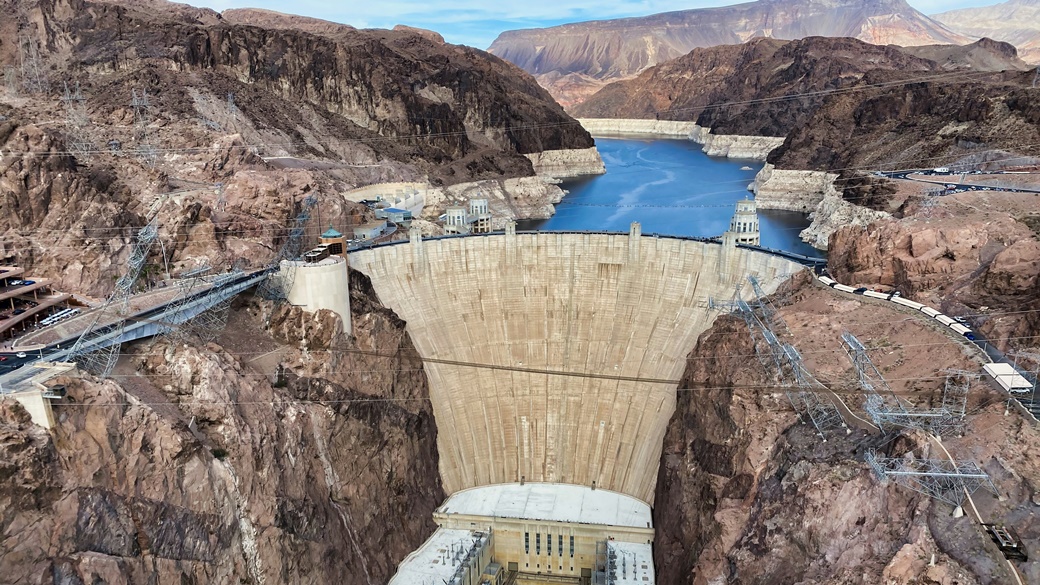
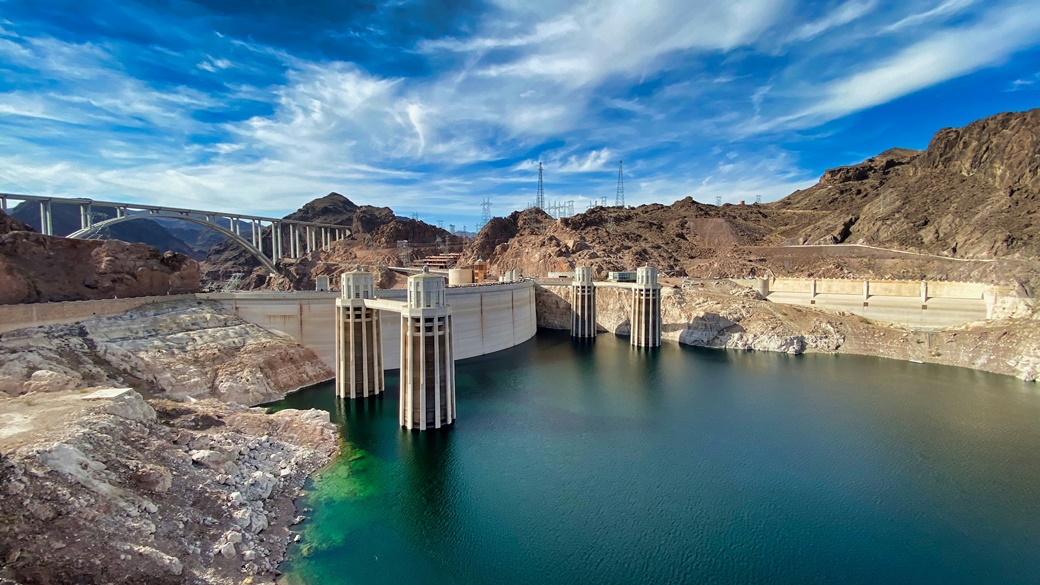
The dimensions of the dam are impressive: its height is 726 ft, its length is 1,244 ft, its width is 656 ft at the base, and 46 ft at the top. Hoover Dam holds 2.5 million cubic meters of water, which is roughly equivalent to the amount of water that flows through the Colorado River in two years.
The dam was officially opened on September 30, 1935, in the presence of President Franklin D. Roosevelt. Interestingly, although it was already referred to as Hoover Dam in the plans, its official name at the time of the opening was Boulder Dam. The name Hoover refers to U.S. President Herbert Hoover, who ironically did not receive an invitation to the grand opening. The name was changed to Hoover Dam only in 1947.
During the construction of Hoover Dam, 112 people lost their lives, and a tragic coincidence is associated with one of these deaths. The first person to die was J.G. Tierney, who passed away during a field survey on December 20, 1922. The last person to die was his son, Patrick W. Tierney, who drowned in a flash flood.
The process of pouring concrete for Hoover Dam was quite unique. Had the concrete been poured continuously, its temperature would have risen so high that it would have remained hot for 125 years. Instead, 215 prefabricated concrete blocks of various sizes were delivered to the site.
-
How to Visit Hoover Dam
🗺️ Where is Hoover Dam?
Hoover Dam is located on the Colorado River, on the border between the states of Nevada and Arizona, close to Interstate 93. Nearby is Lake Mead, and the closest city is Boulder City, which has around 15,000 residents.
🚗 How to Get to Hoover Dam
It’s about 37 mi by car from the Las Vegas Strip, which takes roughly 40 minutes. The direct access road to the dam is Nevada State Route 172. Vehicles cannot drive from the dam into Arizona; you must return to Nevada.
About 1 mi before the dam, there is a checkpoint that all visitors must pass through. It is open 24 hours a day, and in addition to checking identification, you should expect your car to be inspected. We first arrived at the dam at 1:30 AM (don’t ask why), which raised some suspicion. The security team checked the interior of the car, the trunk, and even used mirrors to inspect the undercarriage. Afterward, they allowed us to proceed without issue.
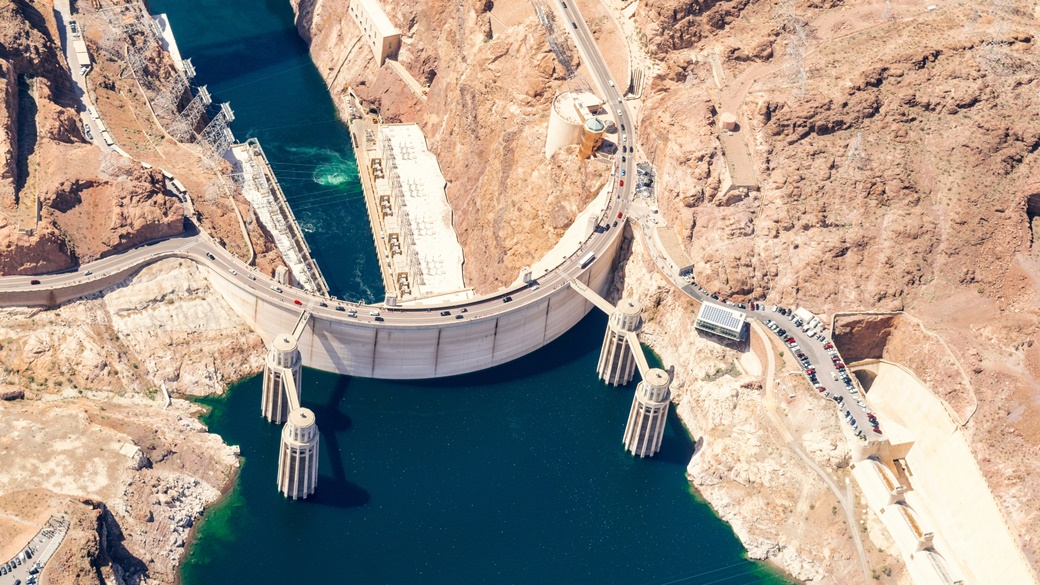
The closest parking lot to the dam is in Nevada, and there is a one-time parking fee of $10.00 (updated February 2025). Parking directly at the dam is not allowed. Further parking areas are free, but be prepared for a longer walk.
🕒 Opening Hours
Hoover Dam is open 24 hours a day, free of charge.
The visitor center inside the dam is open daily from 9:00 AM to 4:15 PM, though the hours may vary throughout the year. For current information, it’s recommended to visit the official Hoover Dam website.
🎟️ Hoover Dam Tickets
At the visitor center, you can pay for guided tours, which are available in two options. The capacity fills up quickly, so it’s advisable to sign up early in the morning. The prices listed were last updated on February 3, 2025.
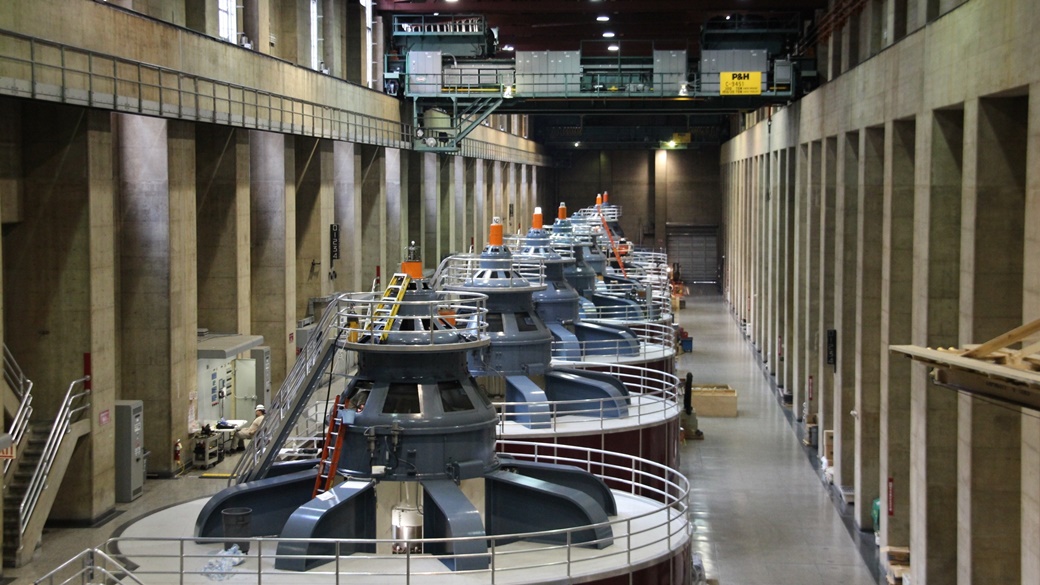
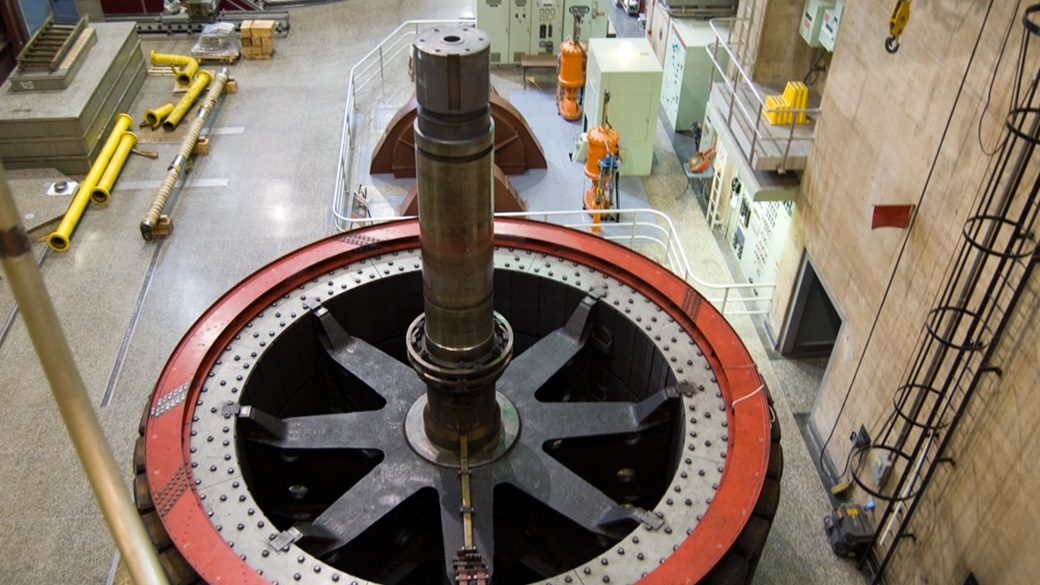
The Powerplant Tour will take you to the original construction tunnels, visit the dam’s viewing platform, and give you a chance to see 8 of the powerplant’s generators. The cost for this tour is $15.00 per person.
The more expensive option is the full Hoover Dam Tour with a guide. This tour takes you to the original tunnels, includes a ride in the elevator to the top of Hoover Dam, allows you to view the Colorado River through the ventilation shaft, and gives you a tour of the powerplant included in the previous tour. The price is $30 per person.
🚌 Hoover Dam Tours from Las Vegas
If you don’t have a rental car in Las Vegas, you can book an organized tour to Hoover Dam. Several companies offer various types of tours, which always include bus transport from the Strip. Tour durations vary depending on the program, typically ranging from 3 to 5 hours.
The advantage of an organized tour is that everything is taken care of for you. Transportation, tickets, and a guide who can answer your questions are all included. The downside is the higher price compared to traveling on your own. Personally, I would also mind traveling in a group.
If you don’t mind traveling in a group and want to save money, I recommend purchasing the Go City Pass Las Vegas. This essentially acts as a pass that allows you to visit attractions in Las Vegas and surrounding areas without paying extra. It’s available for 2-5 days, and you can save hundreds of dollars compared to standard ticket prices.
One of the attractions included in the Go City Pass is the tour to Hoover Dam from Las Vegas. In addition, you can experience a helicopter ride over the Strip, ride the Big Apple Coaster, visit the observation deck of the Eiffel Tower, and see the view from the roof of The Strat, or ride the giant wheel High Roller.
-
Photos of Hoover Dam




Contribute with Your Question or Personal Experience